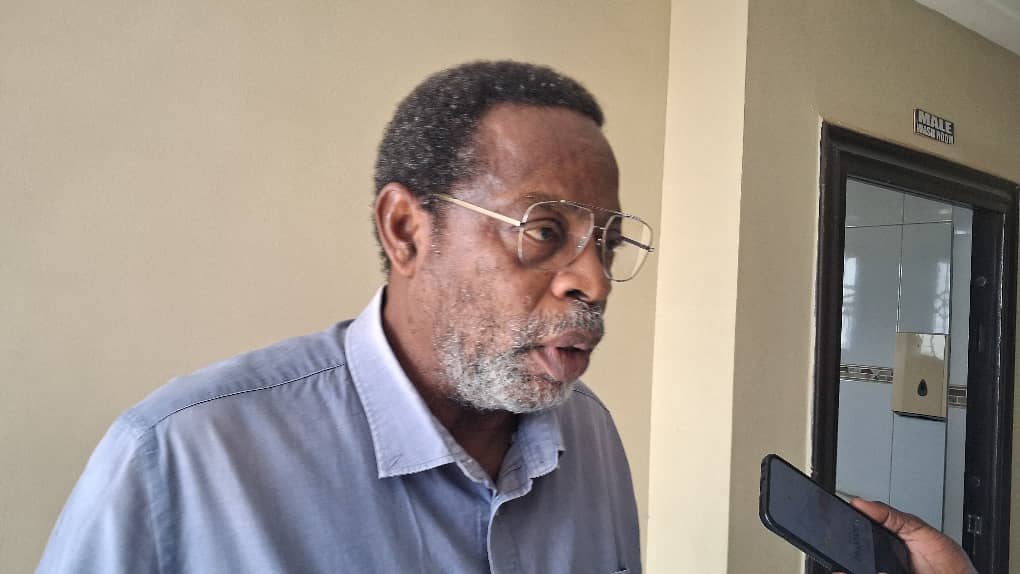
Bolgatanga, Jan. 28, 2026 – A mining advocate and community researcher has raised alarm over the increasing allocation of mining concessions in residential and farming areas in the Upper East Region.
Mr Nyeya Yen, the Chairman of the Savannah Research and Advocacy Network, who raised the concern in an interview with the Ghana News Agency, on the sidelines of a training workshop at Bolgatanga, warned that the trend posed an existential threat to communities, livelihoods, and indigenous culture.
He said while national attention remained largely focused on illegal mining (galamsey), insufficient scrutiny was being given to the long-term implications of large-scale gold mining concessions granted to multinational companies across the region.
Organised by TAMA Foundation Universal, the training on “Community Monitoring and Reporting of Mining Infractions”, was under the Natural Resource Accountability in Northern Ghana (NaRAING) project.
Mr Yen said vast portions of the Upper East Region, particularly Frafra-speaking areas, had been concessioned for mineral exploration, raising fears of future displacement of communities.
“The concern is not only about galamsey, because almost the entire Upper East Region has been given out to mining companies for exploration. Today it is exploration, tomorrow it could be full-scale mining, and when that happens, where will our people go?” he asked.
He noted that companies such as the Cardinal Namdini Mining Limited and the Earl International Gold Mine, two Chinese Mining firms, were exploring for gold in several parts of the region, although active mining was currently limited to parts of the Talensi District.
Mr Yen warned that unlike forest zones, where government had placed restrictions on mining activities, residential and farming communities remained exposed, even though the Upper East Region had very limited land available for resettlement.
“We are only about 2.7 per cent of Ghana’s land area, yet we continue to give out concessions in places where people live and farm. This region is not bushland; it is homes, farms, and communities,” he said.
He expressed concern that if mining expanded unchecked, the region could lose its agricultural base, noting that communities that were once major producers of crops such as tomatoes had shifted almost entirely to mining-related activities.
“Lorries used to come from Accra to buy tomatoes from my village. Today, it is all about mining. Agriculture is disappearing,” he lamented.
Mr Yen also warned that large-scale displacement could erode the cultural identity of indigenous groups in the region, including the Frafra, Gurune, Nabit and Talensi people.
“If communities are broken up and people are pushed out, we risk losing our language, our culture, and our identity. Already, many young people in the south can hardly speak their mother tongues,” he said.
Mr Yen urged government to consider extending restrictions on mining to residential and high-density farming areas and to strengthen regulatory oversight to ensure community protection and sustainable land use.
He called for a broader national conversation on mining that went beyond short-term economic gains to consider the long-term survival of communities in northern Ghana.
“We need to take a longer view, 10, 20, 30 years ahead. This is not about opposing mining outright, but about whether our communities will remain viable and whether our people will survive as a distinct group,” he added.
Touching on illegal mining, Mr Yen described galamsey activities in areas such as Pelungu, Duusi, in Nabdam and Talensi districts respectively as “extremely serious,” and criticised the apparent absence of the National Anti-Illegal Mining Operations Secretariat (NAIMOS) in the region.
“Enforcement appears concentrated in the south, while the north is neglected. You see heavy land degradation that looks like commercial mining, yet there is little visible state intervention,” he said.
Dr Chrys Anab, the Executive Director of TAMA Foundation Universal, called for stricter enforcement to ensure sustainable mining practices and greater benefits to mining communities.
Source: GNA