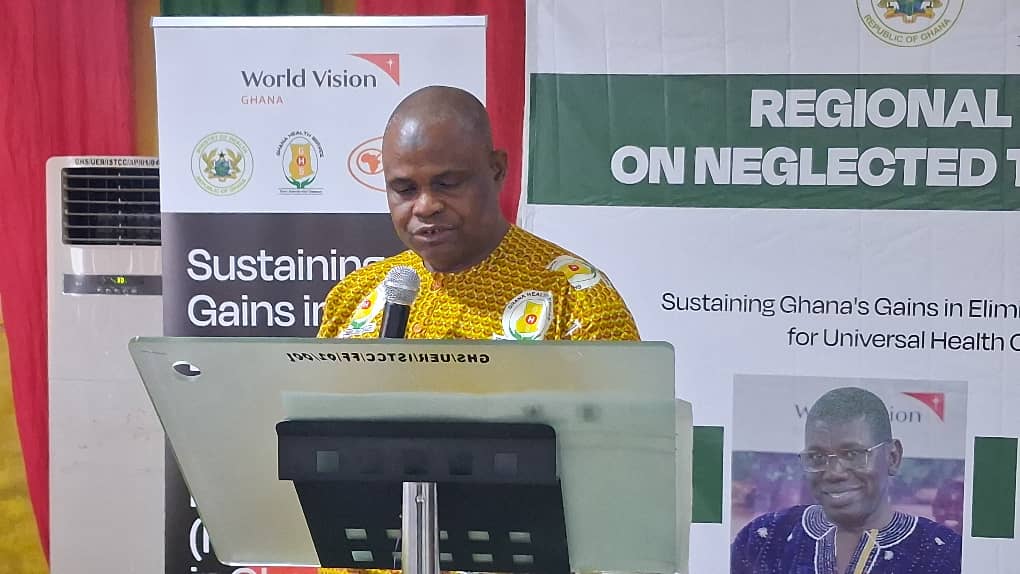
Bolgatanga, March 27, 2026 – Stakeholders in the health sector have called for renewed commitment, stronger collaboration, and sustained investment to eliminate Neglected Tropical Diseases (NTDs) in the Upper East Region and across Ghana.
According to the stakeholders, eliminating NTDs and improving the health outcomes of vulnerable communities require a whole-of-society approach, involving government, development partners, traditional leaders, civil society, and communities.
They, therefore, urged that sustained advocacy, improved sanitation, behavioural change, early reporting of cases, and continuous investment in healthcare systems would strengthen Ghana’s efforts to eliminate NTDs and achieve the Sustainable Development Goals by 2030.
The stakeholders, including the Ministry of Health, Ghana Health Service, Ghana Education Service, Regional Coordinating Council, and civil society organisations, among others, made the call at a Regional Town Hall Meeting under the theme: “Sustaining Ghana’s Gains in Eliminating NTDs: Strengthening Sub-national Ownership for Universal Health Coverage and the WHO 2030 NTD Roadmap.”
The event was championed by the Ministry of Health in collaboration with the Ghana Health Service, the National NTD Programme, and Reverend Dr Joyce Aryee, National NTD Ambassador, with support from World Vision Ghana.
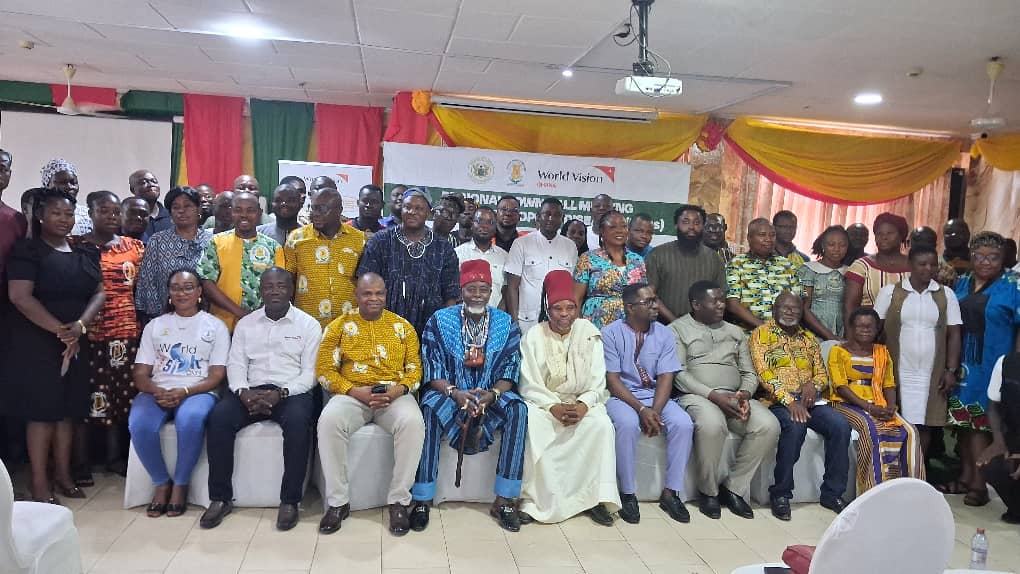
The event was also used to establish an Intra-Regional Coordinating Committee and to outdoor Pe Dennis Aneakwoa Balinia Adda Asagpaare II, the Paramount Chief of the Navrongo Traditional Area, as the Regional NTD Ambassador.
NTDs are a group of infectious diseases that primarily affect the skin, causing chronic illness, disability, disfigurement, and stigma, particularly in poor and marginalised communities in tropical and subtropical regions.
The World Health Organisation currently recognises over 21 diseases, including Buruli ulcer, elephantiasis, yaws, leprosy, and foodborne trematodiases, among others.
Dr Briamah Baba Abubakari, Upper East Regional Director of the Ghana Health Service, said NTDs continued to cast a “silent but debilitating shadow” over communities, particularly among vulnerable populations.
He noted that diseases such as yaws, leprosy, and lymphatic filariasis, though often not fatal, caused disfigurement, disability, and social stigma, trapping affected persons in cycles of poverty.
A 2022 mapping exercise in the region recorded 1,315 cases of hydrocele and 2,373 cases of lymphoedema, commonly known as elephantiasis, highlighting the burden of NTDs.
Again, between 2020 and 2024, 137 new cases of leprosy were detected, with more than 80 per cent reporting at advanced stages, underscoring the need for early reporting and treatment.
“It is clear that many people are still suffering in silence without access to proper care, and this is why we must intensify education and encourage early health-seeking behaviour,” Dr Abubakari said.
Dr Joseph Dodoo, Head of External Health Cooperation at the Ministry of Health, said Ghana had made significant progress in controlling NTDs through interventions such as mass drug administration, improved disease surveillance, and strengthened community-based health services.
However, he stressed that sustaining these gains required coordinated efforts at all levels.
“The establishment of the Regional Coordinating Committee is a strategic step to deepen decentralised coordination, strengthen multi-sectoral collaboration, and ensure that interventions are tailored to local needs,” he said.
He noted that the government’s planned free primary healthcare policy would further accelerate the fight against NTDs by removing financial barriers, expanding access to essential medicines, and strengthening early diagnosis and treatment at the community level.
Mr Joshua Baidoo, Strategy and Integrated Programmes Director at World Vision Ghana, emphasised the need to integrate NTD services into the broader healthcare system and social protection programmes.
He said affected persons often faced stigma, exclusion, and loss of livelihoods, and called for their inclusion in initiatives such as the Livelihood Empowerment Against Poverty (LEAP) programme.
Speaking on behalf of Reverend Dr Aryee, Dr Joseph Opare, Programmes Manager at the Ghana Health Service, highlighted the need for increased domestic financing as donor support declined.
“Progress does not mean victory. Elimination requires sustained commitment, resilience, and investment,” he said.
Mr Donatus Akamugri Atanga, the Upper East Regional Minister, said NTDs remained a major development challenge, affecting productivity, education, and household incomes, and stressed that the newly established coordinating committee must serve as a platform for policy harmonisation, resource mobilisation, and accountability.
Source: GNA