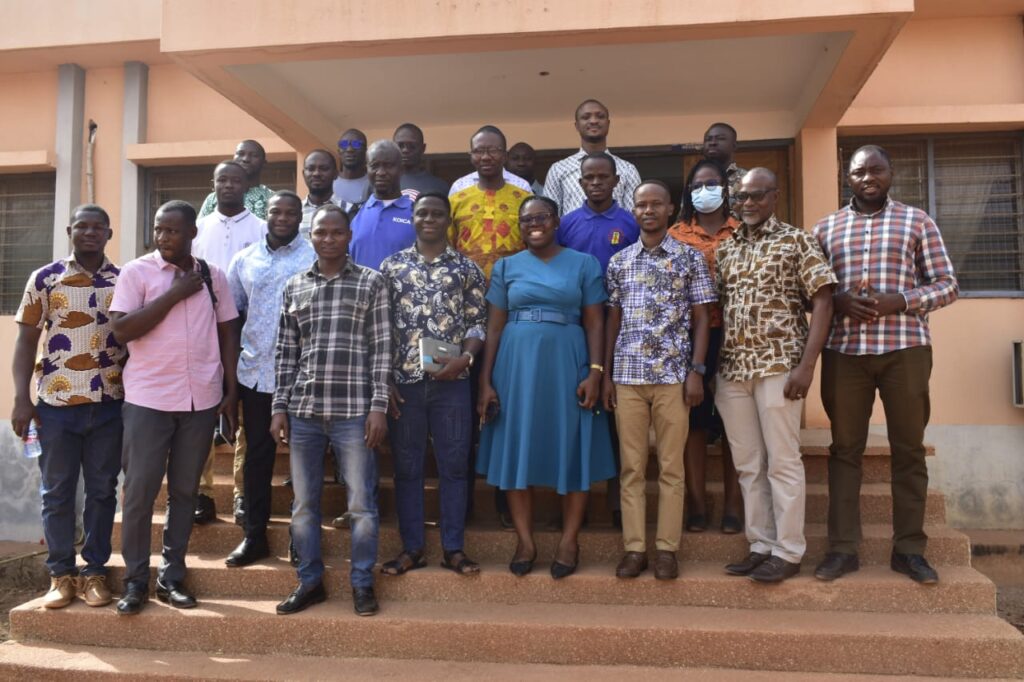
Walewale (NE/R), Jan 30, 2026 – BasicNeeds-Ghana, a non-governmental organisation, has organised an orientation workshop for health workers in the North East Region on the Edinburgh Postnatal Depression Scale (EPDS) screening tool.
The workshop was aimed at introducing the validated EPDS as a screening tool for perinatal depression at district hospitals and Community-based Health Planning and Services (CHPS) facilities, while advocating its inclusion in the Maternal and Child Health Record Book.
It also sought to strengthen the knowledge and competencies of health workers to improve the delivery of integrated maternal and mental healthcare services for pregnant women, adolescent girls and postpartum mothers. Additionally, it aimed at securing the commitment of district, regional and national officials of the Ghana Health Service (GHS) towards institutionalising mental health screening in routine maternal care.
Participants included District Directors of Health Services, health facility heads and managers, training coordinators, HIV and Tuberculosis (TB) coordinators, information officers, mental health focal persons, public health nurses and other key stakeholders in the health sector.
The workshop was organised with funding support from the French Government under the Expertise France Project titled: “Strengthening Community Health Systems to Enhance Integrated People-Centred HIV, Tuberculosis, Sexual and Reproductive Health, and Mental Health and Psychosocial Support Services for Vulnerable Women and Adolescents in Ghana.”
Mr Kingsley Kumbelim, Programme Officer of BasicNeeds-Ghana, said the orientation was to build consensus on the introduction of the EPDS for perinatal screening and to agree on timelines for its implementation at health facilities.
He noted that BasicNeeds-Ghana had, over the years, collaborated closely with the GHS and other stakeholders to address mental health challenges in the country, particularly among vulnerable populations. He expressed appreciation to participants for contributing their professional experiences to enrich the discussions.
Mr Emmanuel Morna, Monitoring and Evaluation Coordinator of BasicNeeds-Ghana, gave an overview of the Expertise France Project and its implementation progress. He said the three-year pilot project, expected to end in 2027, aimed to strengthen integrated service delivery in HIV, TB, sexual and reproductive health, as well as mental health and psychosocial support services for vulnerable women and adolescents.
According to him, findings from the project’s baseline study identified stigma, socio-economic challenges, cultural beliefs, poor health-seeking behaviour and limited health system capacity as key factors affecting maternal mental health. He appealed to stakeholders for sustained collaboration to help achieve the project’s objectives.
Dr Selasie Addom, a psychiatrist, made a detailed presentation on the EPDS screening tool and emphasised the importance of adhering strictly to guidelines for its administration, scoring and interpretation. He stressed that the EPDS is a screening tool and not a diagnostic instrument, and guided participants through the individual items, response options and score interpretations.
A mobile application version of the EPDS was also presented and discussed, with indications that a localised version of the tool would be developed to enhance accurate communication and scoring at the facility level.
Mr Simon Peter Zantoli, North East Regional Mental Health Coordinator, who represented the North East Regional Director of Health, underscored the growing burden of common mental health disorders such as anxiety and depression during pregnancy.
He said that despite the prevalence of these conditions, access to mental healthcare remained limited and was often overlooked within mainstream health services, with long-term consequences for mothers and their children.
Mr Zantoli described the orientation as timely and relevant, noting that it built on a maternal mental health project implemented by BasicNeeds-Ghana in the region between 2015 and 2021. He added that the initiative aligned with ongoing collaborations involving the World Health Organisation Country Office and other partners to strengthen maternal mental health services nationwide.
Participants expressed satisfaction with the orientation, describing it as relevant to their work. Following extensive discussions, they agreed to support the dissemination of the EPDS across all levels of healthcare delivery and committed to providing supportive supervision during the implementation phase at health facilities.
Source: GNA